
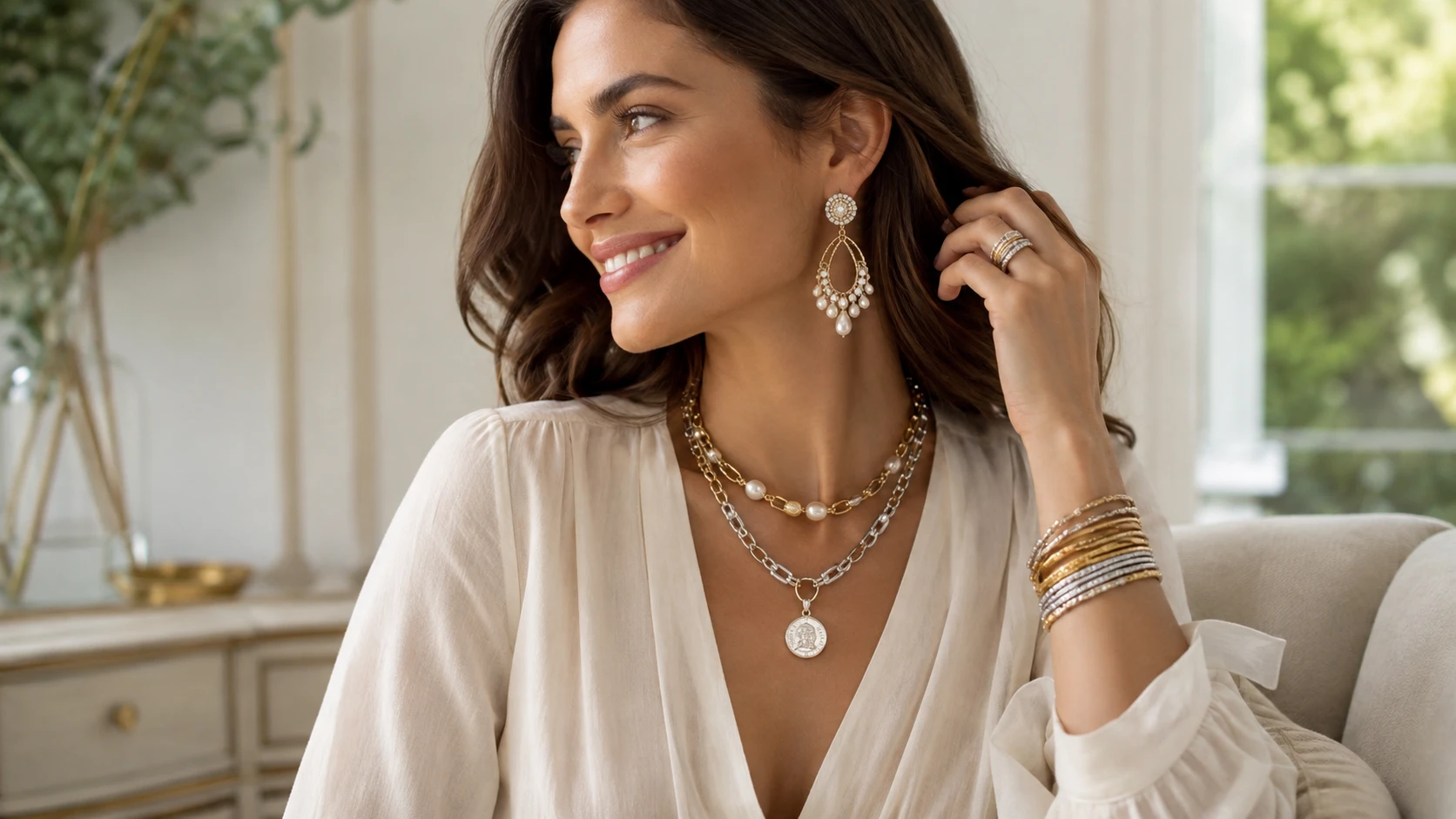
If you’ve ever worn sparkling statement earrings, a layered necklace, stacked bangles, or a gold-plated ring, you’ve probably come across costume jewelry. These accessories make it easy to experiment with different styles without paying the price normally associated with solid precious metals and natural gemstones.
So, what is costume jewelry, what materials are used to make it, and how is it different from fine jewelry? This guide explains the costume jewelry meaning, common costume jewelry materials, popular styles, quality signs, everyday wear, and simple ways to help your favorite pieces last longer.
What Is Costume Jewelry?
Costume jewelry is fashion-focused jewelry made primarily from affordable materials rather than solid gold, platinum, or valuable natural gemstones. Common materials include base metals such as brass and copper, along with gold or silver plating, cubic zirconia, glass crystals, rhinestones, faux pearls, enamel, resin, and synthetic gemstones.
You may also hear it called fashion jewelry. Both terms commonly describe accessories designed mainly for style, versatility, and changing fashion trends. Costume jewelry can include inexpensive seasonal pieces, but the category also includes carefully made accessories with secure settings, polished finishes, detailed designs, and better-quality plating.
What Does Costume Jewelry Mean?
Costume jewelry means fashion-focused jewelry made primarily from affordable or non-precious materials rather than solid precious metals and valuable gemstones. It is designed to offer a wide range of styles, colors, and designs at a more accessible price than many fine-jewelry pieces.
The term is commonly used for statement and trend-focused accessories such as earrings, necklaces, bracelets, bangles, and rings. Depending on the piece, costume jewelry may use base metals, plating, crystals, faux pearls, resin, glass, enamel, or synthetic stones.
What Is Costume Jewelry Made Of?
Wondering what is costume jewelry made of? There isn’t one standard material because different manufacturers use different combinations. Common costume jewelry materials include brass, copper, zinc alloys, stainless steel, aluminum, gold plating, silver-tone finishes, cubic zirconia, rhinestones, glass crystals, faux pearls, enamel, resin, acrylic, and synthetic gemstones.
Many pieces begin with a base metal and receive a decorative coating such as gold plating or a silver-tone finish. The materials used can affect the jewelry’s weight, appearance, durability, skin compatibility, and care requirements. They can also influence how long a piece lasts, which is why checking material information before buying is important.
Common costume jewelry materials include plated metals, crystals, faux pearls, and synthetic stones.
The U.S. Federal Trade Commission explains that gold-plated jewelry consists of gold applied over another metal and that the plating can gradually wear depending partly on use and coating thickness.
For more detail on plated finishes and styling, see Geniemerce’s gold-plated jewelry guide.
Types of Costume Jewelry
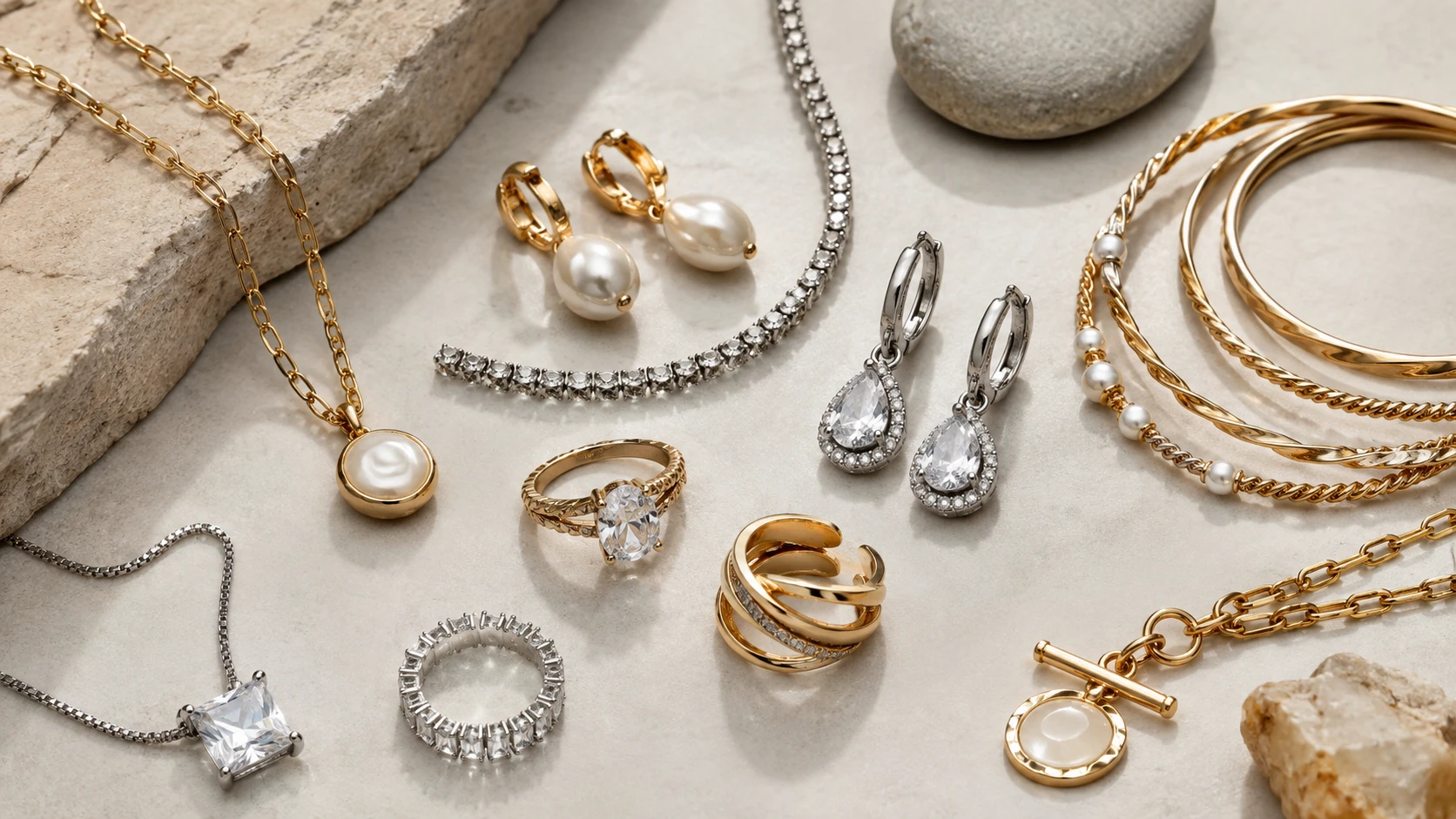
There are many types of costume jewelry, ranging from minimal everyday accessories to bold pieces designed for weddings, parties, and special occasions. The most useful choice depends on your outfit, comfort, and the role you want the jewelry to play.
Earrings
Fashion earrings include studs, hoops, drops, chandelier earrings, and oversized statement designs. Simple earrings work well for everyday outfits, while larger styles can become the focal point of an evening look.
Explore different earring styles to compare shapes and sizes for different looks.
Necklaces and Chokers
Costume necklaces range from delicate chains and pendants to layered designs, statement necklaces, and chokers. A simple necklace can add polish to everyday clothing, while bold designs work well when you want the jewelry to become the center of attention.
Bangles and Bracelets
Bangles, cuffs, charm bracelets, and stackable bracelets add movement and texture to an outfit. You can wear a single statement bangle for a clean look or layer several slim pieces for more impact.
Browse different bangle styles for styling inspiration.
Rings
Costume rings commonly feature cubic zirconia, crystals, synthetic gemstones, or decorative metalwork. They allow you to experiment with large stones, unusual shapes, and trend-driven designs without investing in expensive precious gemstones.
Costume Jewelry vs Fine Jewelry
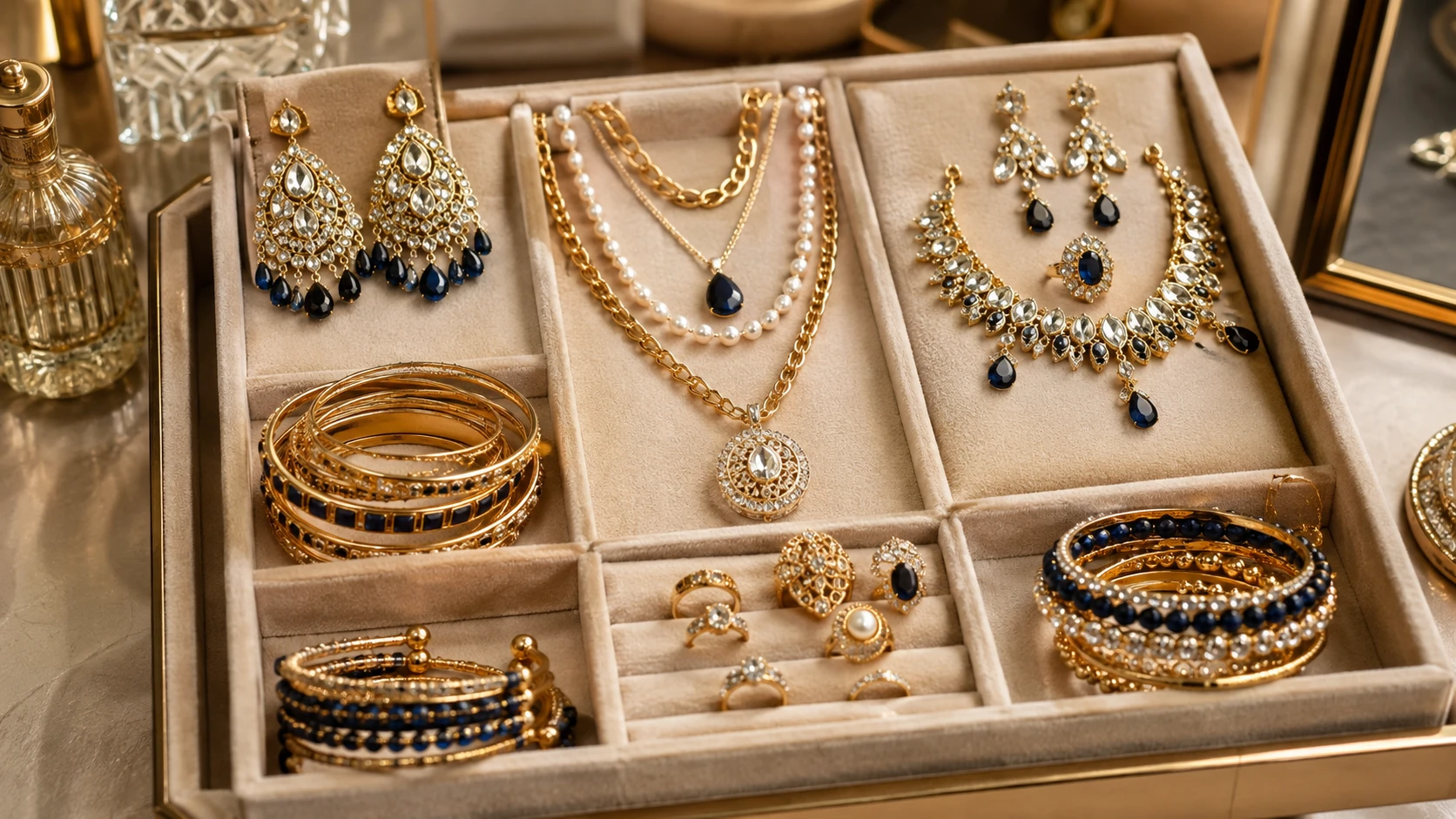
Understanding costume jewelry vs fine jewelry helps you choose the right piece for your needs. Fine jewelry generally emphasizes precious materials, long-term wear, and material value, while costume jewelry emphasizes styling flexibility, variety, and affordability.
| Feature | Costume Jewelry | Fine Jewelry |
| Materials | Base metals, plating, CZ, glass | Gold, platinum, sterling silver, precious gems |
| Cost | Generally more affordable | Usually more expensive |
| Main purpose | Fashion and styling | Long-term wear and material value |
| Trend flexibility | High | Often more timeless |
| Resale value | Usually limited | Can have material value |
| Care | Gentle handling often needed | Depends on metal and stones |
Neither type is automatically better. Fine jewelry can make sense for milestone purchases, sentimental pieces, heirlooms, and long-term wear. Fashion jewelry is useful when you want to explore trends, different colors, statement pieces, and new styling ideas without making every accessory a major investment.
How to Identify Costume Jewelry
Learning how to identify costume jewelry involves checking materials, markings, construction, and the seller’s product information. Fine jewelry often carries recognized purity marks. For example, sterling silver may be marked 925, while gold jewelry may carry markings such as 14K or 18K.
- A manufacturer or designer mark
- No precious-metal purity mark
- Plated surfaces
- Synthetic or imitation stones
- Glass or resin details
- Base-metal construction
Price and weight can provide clues, but they should not be used as proof. A high-quality vintage costume piece can be valuable, while a lightweight design is not automatically low quality. When shopping online, clear material descriptions are usually your best source of information.
How to Choose Quality Costume Jewelry
Not all fashion accessories are made to the same standard. When choosing quality costume jewelry, look beyond the design and check the construction, finish, and material disclosure.
- Smooth edges
- Secure clasps
- Straight earring posts
- Even plating or finish
- Secure stone settings
- Strong connections between components
- Clear material descriptions
- Appropriate care instructions
Look closely at product photos as well. Stones should appear evenly positioned, finishes should look consistent, and visible glue around decorative stones may indicate weaker construction.
Skin sensitivity is another consideration. The American Academy of Dermatology notes that nickel is a common cause of allergic contact dermatitis and recommends paying attention to jewelry materials if you are sensitive.

If you know you have sensitive skin, pay attention to nickel-free or appropriate hypoallergenic materials rather than choosing jewelry based only on appearance.
Can You Wear Costume Jewelry Every Day?
Yes, many people wear costume jewelry every day. However, frequent wear exposes jewelry to sweat, moisture, perfume, lotion, sunscreen, hand sanitizer, friction, and cleaning products. Rings and bracelets may experience more wear because they frequently touch desks, bags, phones, and other surfaces.
For everyday jewelry, choose comfortable pieces and remove them before showering, swimming, exercising, or household cleaning. If you are building a practical daily collection, Geniemerce’s everyday jewelry essentials guide can help you think about versatile pieces for regular wear.
How Long Does Costume Jewelry Last?
There is no exact answer to how long costume jewelry lasts. Its lifespan depends on material quality, plating thickness, construction, frequency of wear, moisture exposure, skin chemistry, storage, and cleaning habits.
A plated ring worn every day may show changes faster than a necklace worn occasionally. Well-made pieces can remain attractive for years when worn thoughtfully and stored properly, but plated fashion jewelry should not automatically be expected to behave like solid precious metal. Your expectations should match the materials, price, and intended use.
How to Care for Costume Jewelry
Knowing how to care for costume jewelry can help protect its finish and appearance. One simple rule works especially well: put jewelry on last and take it off first. Apply perfume, lotion, sunscreen, makeup, and hairspray before putting on your jewelry, and let those products dry first.
Remove costume pieces before showering, swimming, exercising, sleeping, or household cleaning. Keeping fashion jewelry away from unnecessary moisture and chemicals can reduce surface wear and help maintain its finish.
How to Clean Costume Jewelry
Cleaning should be gentle. Start by wiping your jewelry with a soft, dry microfiber cloth after wearing it to remove fingerprints, skin oils, and light residue.
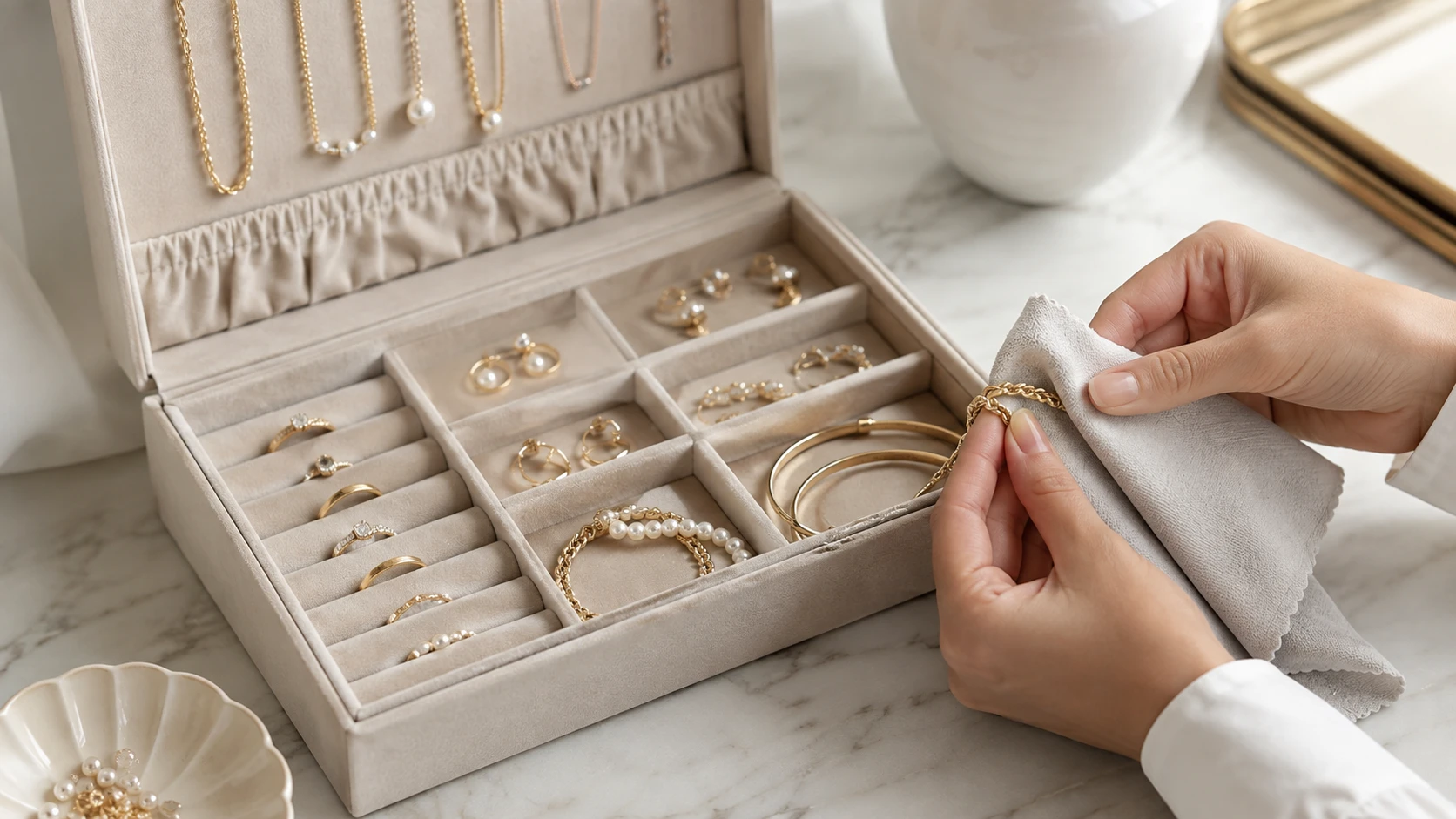
Avoid automatically using toothpaste, bleach, abrasive powders, strong jewelry dips, aggressive polishing, or long soaking. A piece of costume jewelry may combine plating, adhesive, faux pearls, crystals, enamel, and other materials, so a cleaner that works for one component could damage another. Follow the manufacturer’s care instructions whenever possible.
How to Store Costume Jewelry
Store jewelry separately whenever possible. Soft pouches, lined jewelry boxes, divided organizers, individual compartments, and necklace hooks help reduce scratching and tangling.
Avoid storing fashion jewelry in consistently humid areas such as bathrooms. Make sure each piece is clean and completely dry before storage, especially after a warm day when sweat or skin oils may remain on the surface.
FAQs
Is costume jewelry the same as fashion jewelry?
The terms are commonly used interchangeably. Both generally describe jewelry created mainly for fashion using more accessible materials than traditional fine jewelry.
What is costume jewelry made of?
It may contain brass, copper, stainless steel, zinc alloys, plating, cubic zirconia, rhinestones, glass, resin, enamel, faux pearls, and synthetic gemstones.
Does costume jewelry tarnish?
Some costume pieces can tarnish, fade, or change appearance over time. Moisture, chemicals, skin oils, friction, materials, and storage conditions can all influence how quickly this happens.
Can costume jewelry get wet?
Keeping it dry is generally the safer approach unless the manufacturer specifically states that the piece is suitable for water exposure.
Is Costume Jewelry Fake Jewelry?
Not necessarily. Costume jewelry is generally made from more affordable or non-precious materials instead of solid precious metals and valuable gemstones. A piece can still have good craftsmanship, attractive design, and durable construction even though it is not fine jewelry.
Is costume jewelry good for sensitive skin?
It depends on the materials. People with nickel sensitivity should check material information carefully and choose jewelry that is appropriate for their skin.
Is costume jewelry worth buying?
Yes, especially if you enjoy experimenting with trends, statement pieces, and different jewelry styles without paying fine-jewelry prices. The best value comes from choosing well-constructed pieces with clear material information.
Final Thoughts
So, what is costume jewelry? It is fashion-focused jewelry made primarily from accessible materials such as base metals, plating, synthetic stones, crystals, faux pearls, enamel, and other decorative elements.
Its biggest advantage is versatility. Costume jewelry lets you experiment with earrings, necklaces, bangles, rings, colors, textures, and changing fashion trends without treating every purchase as a major financial investment.
Look for good craftsmanship, understand the costume jewelry materials, choose pieces suited to your skin and lifestyle, and protect them from unnecessary moisture and chemicals. With thoughtful selection and proper care, fashion jewelry can remain an attractive, useful, and expressive part of your collection for years.
Explore Geniemerce for more jewelry styling guides and curated fashion-jewelry inspiration. Visit Geniemerce